

Please Help Me
Reach My Goal
Raised
$0
My Goal
$3,500

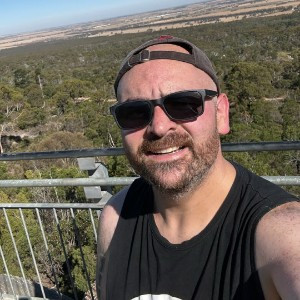
 I'm Charging for my The Fastuca Family

At 12 as kids should be learning at school, I was learning about cancer.
Cancer is something my family is all too familiar with.
Over the years it has touched almost every corner of the Fastuca family. Bowel. Throat. Ovarian. Kidney. It is a list no family ever wants to have. One of the major contributors in our case is a genetic condition called familial adenomatous polyposis, or FAP (those that have been on the internet for as long as I have been would chuckle at the name, I have at times). I was diagnosed when I was 12 years old. At 13, I watched my aunty, the mother of my best friend die from cancer.
Around the same time, I watched as a cousin - and someone especially as I was maturing I viewed as an older sister of mine spent weeks in hospital fighting the same disease. Cancer was not an abstract concept to me. It was hospital rooms. It was fear. It was watching adults try to be strong.
My other aunty Grace, who I and many members of my family leant on as a mother, used to joke that when she died she would haunt us (usually as we were doing things we shouldn’t be doing). I spoke (I use that term loosely) at her eulogy in front of what felt like 500 people - such was the impact she had on people (and I don't doubt she made the same jokes with most in the room). We laughed. That was how we coped. Humour made heavy things feel lighter. Both of my aunties passed away in their 40s. I never met my grandmother. She died from this disease before I was born. It has always seemed to hit the women in my family hardest.
In my immediate family alone, ten of us have lived with a FAP diagnosis. Ten people navigating colonoscopies, screenings, surgeries and the constant mental load that comes with knowing what this condition can lead to. Four of those ten are no longer with us.
FAP is caused by a mutation of the APC gene. Normally, this gene acts as a tumour suppressor. When it does not function properly, polyps grow uncontrollably in the bowel. Without surgical intervention, the risk of colorectal cancer is almost certain.
There is also a cruel irony attached to it. Because tumour suppression is compromised, surgeries themselves can increase the risk of desmoid tumours. They are benign, but they can be aggressive and life altering. Even treatment comes with complexity.
This is the reality of living with FAP.
In rooms filled with cancer survivors, I consider myself fortunate. To date, my polyps have been more concentrated and manageable than what others in my family have faced, with that said I will still undergo life altering surgery this year.
Even with that though, this isn’t a cure. FAP is lifelong. It does not disappear after one procedure or one clear scan. It is ongoing monitoring. It is conversations about risk. It is thinking about future generations. It is carrying the stories of those who are not here anymore.
It is part of my story. It is part of my family’s story.
That is why this March I am taking on The March Charge for the Cancer Council Australia.
I am walking one kilometre every single day for the ten of us who have lived with this diagnosis. For those still fighting. For the four we have lost. And for the generations in our family who deserve better odds than the ones handed to us.
If you feel compelled to support, you can donate towards my fundraising goal, join me for a walk during March, or simply share the page.
Every step matters.
MY ACHIEVEMENTS
Help me light my badges
 PAST
PASTPARTICIPANT
 REFERRED A FRIEND
 UPDATED PROFILE
PICTURE
 MADE A SELF
DONATION
 SHARED ON
SOCIAL
 REACHED
 $300
 DIAMOND CLUB
MEMBER
 REACHED
TARGET
 RANDOMDONATION
 Pre-registerfor next year


So far this year I’ve helped provide:

1616 kids with a SunSmart education
or

73 calls to trained cancer professionals on 13 11 20
or

22 days of a PHD student’s world-class research

My Fundraising over the years
Thank you to my Sponsors
$527.50
Anonymous
$211
Ross Fastuca
❤️
$211
Anonymous
So proud of you! 💕
$158.25
Chantel Garraway
Hi Brad great work Love Chantel
$158.25
The Wattys
we love you brother
$106.12
Adam Gallichan

$106.12
Brett S
Onya mate - great work!
$106.12
Tuey
Proud of you in so many ways, my friend.
$106.12
Tracy F
Good for you Brad. FAP can just f*^k off.$
$106.12
Hunter S Thompson
$106.12
Michael Farrugia
Proud of ya mate!
$100
Caspa Media
You got this man 💪
$100
Sarspud
$100
Ash & Sparrow
$54.12
Starfire Aquartics Billy
Keep it up brother!
$54.12
Charlene S
Great effort!
$54.12
Ev Williams
Amazing effort for an amazing cause. Well done!
$54.12
Danni And Chris Benson
Super proud of you Brad! Keep up the good work! ❤️
$50
Meagan F
Love your work Bradley. We got this!!
$33.15
Eden
Keep up the amazing work!!
$33.15
Jess
$33.15
Chloe Carter
Well done!! A cause close to many peoples hearts.
$32.43
Vickie Hayes
Go Brad 💪
$30
Em
$22.58
Maria Papageorgiou
Keep up the great work, Brad.
$22.58
Anonymous
V proud. V well done. 💪
$22.58


Hi Brad, it’s a tough road for you and your family. Stay positive and strong.